

Most creators post the same idea to four or five places, and retype it every time. The caption drifts, the link is right on two of them and wrong on the third, and nobody can say which platform actually sent anyone.
OneSol has a composer that writes to all of them at once. Before it can, each account has to be connected — which is a one-minute job you only do once per platform.
What connecting actually does
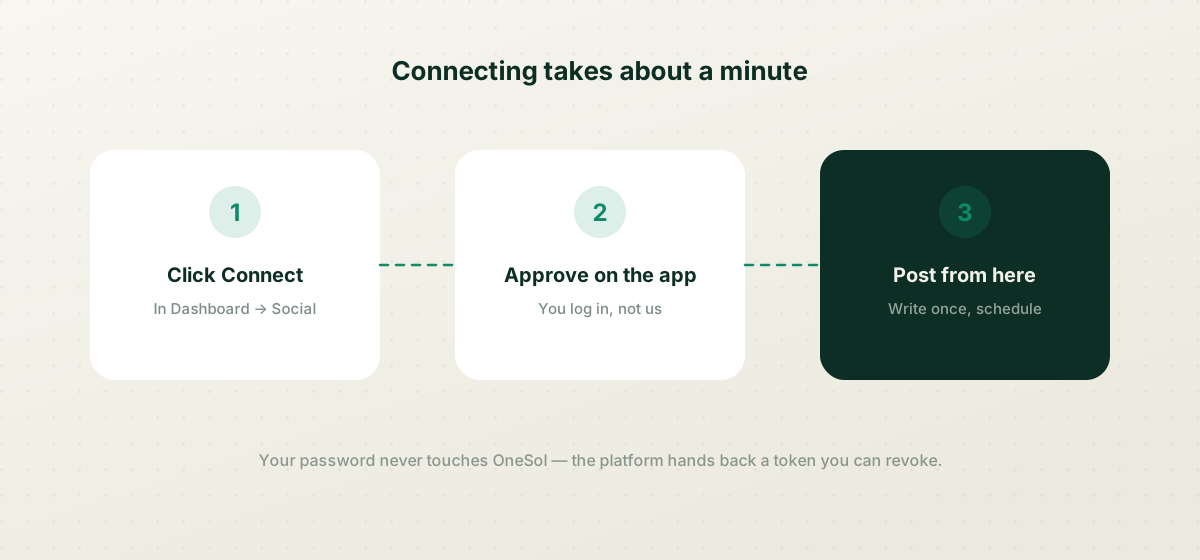
You are not handing over a password. You click Connect, the platform's own login page opens, you approve OneSol, and the platform hands back a token. That token is what posts on your behalf, and you can revoke it from the platform at any time without touching your account.
Then one box reaches all of them
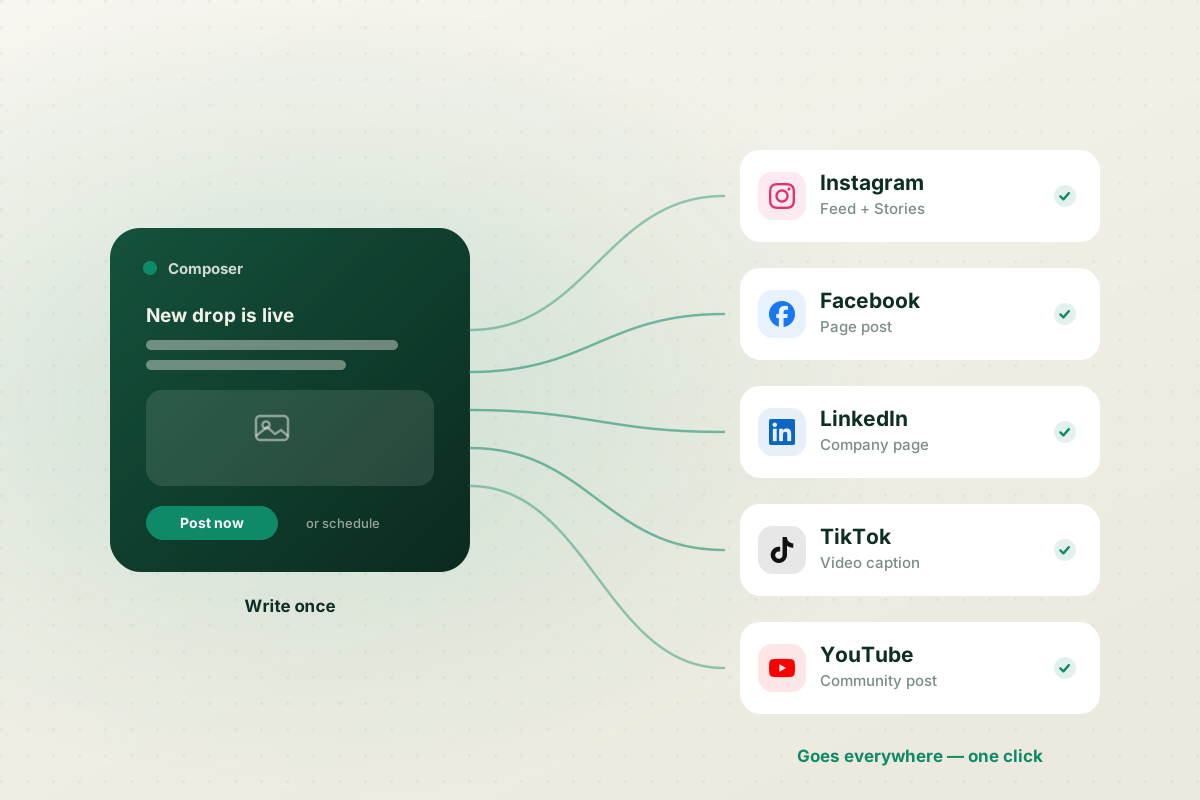
Once accounts are connected, the composer treats them as destinations rather than separate jobs. You write the post, pick which accounts it goes to, and either publish it or put it on the calendar.
The useful part is not the time saved typing. It is that the same message goes out with the same link, so when something works you can see it, and when something flops you know it flopped everywhere rather than wondering whether you just worded it badly on one.
A realistic order to do this in
You do not need all of them on day one. Connect the two where your audience actually is, get into the habit of composing in one place, and add the rest when it stops being a novelty.
- Connect the platform you post to most. That is where the habit forms.
- Add the one you keep forgetting about. It is usually the one with the least competition for attention.
- Leave the rest until the first two are routine. An unused connection is just another thing to keep an eye on.
One Idea, Three Shapes
Sending a post everywhere works — but 'everywhere' doesn't mean 'identical'. The same idea wants a slightly different shape per place, and the good news is these are edits, not rewrites. A long caption that reads well on Instagram becomes a punchier opening line on a platform that hides everything after the first sentence; a vertical video cut for Reels or TikTok is the wrong frame dropped straight onto a feed that favours landscape. Write the idea once, then trim and reframe.
Do the reframing at the top, where attention is decided. The first line has to earn the tap on every platform, but each crowd needs a different first line — a quick 'here's what I'd change' for a fast-scroll feed, a fuller setup where people read on. Keep the body identical if you like; it's the hook and the format that repay a minute of adjustment each.
The links are where a blind copy-paste shows most. A 'link in bio' instruction makes sense on Instagram and reads as nonsense on a platform where links go straight in the post; an @handle that means you on one network points at a stranger on another. Fix those per destination and the same core post lands cleanly everywhere instead of half-broken in three places.
Where Blind Cross-Posting Backfires
The failure isn't posting to many places; it's posting the same artefact to places that read it differently. A screenshot of a tweet, complete with its own like counts, posted to Instagram, tells everyone it's a leftover from elsewhere and quietly lowers how it performs. Native-looking content beats obviously-recycled content, so strip the tell-tale furniture — other platforms' watermarks, an 'RT', a TikTok logo burned into a video you're now putting on Reels.
Timing collides too. A post that suits a professional network on a Tuesday morning can be wrong for an entertainment-led feed on a Saturday night, in tone and in when people are actually there. Sending everything at one scheduled instant is convenient, but it treats very different rooms as one. Even a rough per-platform sense of when your people show up beats firing all at once.
And know what shouldn't travel at all. An inside-joke reply that lands with your close community can read as baffling to a colder professional audience; a platform-specific trend or sound means nothing lifted somewhere it isn't running. Cross-posting is a default worth having, with a short list of exceptions you hold back — not a rule you apply to every single thing.
A Repeatable Fifteen-Minute Routine
A little structure turns this from a chore into a habit. The aim is one pass that produces several native-feeling posts without starting from scratch each time, so build a small routine you can run on autopilot and refine as you learn what each platform rewards.
Run the same pass every time and it gets faster: within a few weeks you'll know which platform to draft for first and which opening line each feed prefers, and the whole thing collapses to a quarter of an hour. The order below is the one that tends to work.
- Write the full version once, for the platform that allows the most room
- Trim a punchier first line for the fast-scroll feeds, keeping the body
- Swap the link instruction and @handles to match each destination
- Strip any other-platform watermark, then queue each to post when that audience is actually online